
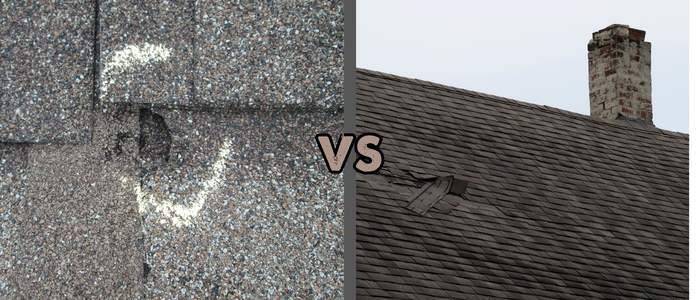
Last summer, a homeowner called me after a powerful storm passed under a sky full of bright stars. The next morning, they noticed strange marks on their shingles and wondered if the storm had damaged the roof.
Situations like this are more common than you might think. Roof surfaces can show unusual spots or dents, but the real challenge is figuring out what actually caused them.
Many homeowners struggle to tell the difference between blistering caused by heat and aging, and the impact marks left behind after hailstorms. At first glance, the signs can look surprisingly similar. However, the causes and repair approaches are very different.
That’s why careful inspection matters. When you clearly understand roof blistering vs hail damage, you avoid unnecessary repairs, reduce long-term maintenance problems, and make smarter decisions about protecting your roof.
Roof Blistering vs Hail Damage: Quick Comparison
| Feature | Roof Blistering | Hail Damage |
| Primary Cause | Heat buildup, moisture, and trapped air beneath roofing layers gradually create pressure that lifts the shingle surface into small bubbles over time. | Impact from hailstones striking the roof during storms, often driven by wind, creating sudden dents or bruises on shingles. |
| Typical Appearance | Small raised bubbles, sometimes soft to the touch, that may eventually break and expose darker material beneath the surface. | Circular dents, cracks, or bruised spots where hailstones hit with force, sometimes knocking granules loose from the shingle surface. |
| Affected Areas | Frequently scattered across sun-exposed sections where heat builds up during long warm seasons. | Usually concentrated along roof slopes facing the direction of the storm. |
| Damage Progression | Develops slowly as heat and trapped moisture expand beneath shingles. | Appears suddenly during severe weather events. |
| Inspection Difficulty | Often subtle early and easy to overlook without a close look. | Usually easier to spot after storms when multiple impacts appear together. |
| Maintenance Needs | Often monitored first, with targeted repair if blistering spreads. | May require repair or replacement of damaged shingles. |
What Is Roof Blistering and Why It Happens
When I inspect older roofs, I sometimes find small bubbles forming beneath the shingle surface. That condition is known as roof blistering. It happens when moisture or trapped air becomes sealed inside roofing layers during manufacturing or installation.
As the roof heats up under sunlight, that trapped air expands and pushes upward, creating a small raised blister. Over time, these bubbles may rupture.
Once that happens, the protective granules on the shingle can loosen or fall away, exposing the underlying material to sunlight and weather.
Several factors contribute to this process. High temperatures, limited attic ventilation, and aging materials can accelerate blister formation. Manufacturing imperfections occasionally play a role as well.
If ignored, blistering can gradually spread. That’s why routine roof inspections help detect early warning signs before small surface issues become larger problems.
Common Signs of Roof Blistering
- Small raised bubbles appearing across the shingle surface, often noticeable during close inspection on warm sunny days.
- Granule loss surrounding blister spots, where the protective mineral layer begins to loosen or shed.
- Cracked surfaces after blisters rupture, exposing darker material beneath the top layer.
- Clusters of bumps in areas that receive the most sunlight, especially on south-facing slopes.
- Slight color changes or faded patches where heat stress has affected the shingle surface.
- Blister spots slowly increasing in number over months or years.
- Increased vulnerability to moisture intrusion if ruptured areas remain exposed.
Understanding Hail Damage on Roofing
Hailstorms can be surprisingly destructive to roofing systems. When hailstones fall from high storm clouds, they accelerate rapidly before striking the roof. Even moderately sized hail can hit shingles with significant force.
Unlike blistering, which forms gradually from inside the roofing material, hail damage occurs instantly. The impact compresses the shingle surface, often creating dents or bruised spots where the protective granules have been knocked loose.
The severity of damage depends on several conditions. Large hailstones, strong wind speeds, and the age of the roof all influence how much harm occurs during a storm. Older shingles may crack more easily when struck.
Because hail damage isn’t always obvious from the ground, I often recommend a professional inspection after major storms. Misidentifying these marks is one of the most common mistakes homeowners make when evaluating roof damage.
How Hail Damage Affects Roof Longevity
When hail strikes shingles, it can weaken their protective structure. The impact often loosens the granules that shield the asphalt layer from sunlight and weather exposure.
Once that protective surface begins to erode, the roof becomes more vulnerable to long-term deterioration. Small bruises may gradually expand, especially after additional storms or temperature fluctuations.
Over time, this can shorten the lifespan of the roofing system. Water infiltration also becomes more likely if cracks develop around the impact areas.
The key is early identification. Addressing damage soon after a storm helps prevent small impact marks from evolving into leaks or structural problems.
Roof Blistering vs Hail Damage: Key Differences at a Glance
| Aspect | Roof Blistering | Hail Damage |
| Cause | Internal material stress, trapped moisture, or heat expansion within shingles. | External impact from hailstones during severe storms. |
| Development Speed | Slow, progressive formation over months or years. | Sudden damage that appears immediately after a storm. |
| Damage Pattern | Random blister spots scattered across shingles. | Circular dents or bruised marks often grouped together. |
| Inspection Timing | Often discovered during routine maintenance checks. | Frequently noticed shortly after storms. |
| Typical Risk Level | Usually cosmetic at early stages but may worsen gradually. | Can quickly compromise shingles and reduce roof protection. |
Which Roof Problem Is More Serious?
Homeowners often ask me which issue is worse. The answer depends on the extent of the damage and the condition of the roof.
Blistering usually begins as a surface issue. At first, it may appear cosmetic, but large ruptured blisters can eventually expose the underlying roofing layers.
If moisture begins entering through those openings, deterioration can accelerate. Hail damage tends to create problems more quickly. A strong impact can crack shingles or strip away protective granules in a single storm.
That sudden weakening may lead to leaks sooner than blistering typically would. Every roof is different, though.
Age, ventilation, and maintenance history all influence how serious the damage becomes. When the cause isn’t clear, a professional inspection can provide clarity and prevent unnecessary repairs.
When to Call a Roofing Professional
- After a severe hailstorm passes through your neighborhood.
- If multiple blisters suddenly appear across several shingles.
- When you notice dents, cracks, or missing granules after storms.
- If water stains or interior leaks appear following heavy weather.
- When damage seems to spread across the roof surface.
- During routine seasonal inspections to catch hidden issues early.
- If you’re unsure whether the marks you see are blistering or storm impact.
Frequently Asked Questions
How do you tell the difference between hail damage and blisters on a roof?
Blisters are usually larger with uneven or irregular shapes, forming when moisture or heat becomes trapped beneath the roofing material. In contrast, hail damage typically shows up as small, circular dents that match the impact shape of hailstones.
What does blistering look like on a roof?
On a roof, blistering can show up as small raised spots that resemble bubbles on the asphalt shingles. These areas may look smooth or slightly uneven. Blisters can appear individually or grouped together, and their size can range from tiny pin-like marks to larger raised patches across the shingle surface.
Is asphalt shingles blistering the same as hail damage?
Shingle blistering happens when small raised bubbles develop on the surface of asphalt shingles. These marks can sometimes look similar to hail damage, but they are not caused by storms.
Blisters typically form due to issues with the asphalt bitumen used during the manufacturing process of asphalt shingles. Over time, these imperfections may appear as the shingles are exposed to heat and weather conditions.
How do you identify hail damage on shingles?
Hail that is large enough to cause damage often leaves visible signs such as small dents, bruised spots, chipped shingle edges, and breaks in weaker areas like rake edge overhangs.
However, when mineral granules are crushed due to intentional blunt force or manual impact, that type of damage is typically not associated with natural hail events.
Conclusion
Roof problems often begin with small visual clues a bump here, a dent there and those signs can leave homeowners wondering what really happened. Understanding roof blistering vs hail damage helps remove that uncertainty.
Blistering usually develops slowly from heat and trapped moisture within roofing materials, creating raised bubbles on shingles. Hail damage, on the other hand, occurs suddenly when hailstones strike the roof during storms, leaving dents or bruised areas behind.
Recognizing these differences allows you to respond appropriately. Routine inspections, careful observation after storms, and timely repairs can prevent minor issues from growing into larger problems.
By learning the visual signs and causes behind these two common roof issues, you can protect your roof’s lifespan and avoid unnecessary repairs.
So the next time you look up at your shingles after a storm or a hot summer day, do the marks you see resemble slow-forming blisters, or the sudden impacts of hail?